
Gary's Garage - CLK55 Motor Mounts, AGAIN!
If you're a CLK55 owner, you might already know that this car eats motor mounts, especially the left one. The M113 engine in the C208 chassis produces 376 ft lbs. of torque, and remembering Newton’s Laws, if you are exerting 376 ft lbs. of torque on the driveshaft then there must be an equal torque in the opposite direction to restrain the engine. This is the job of the motor mounts, and due to the direction of engine rotation the resulting forces tend to pull the left side motor mount apart, i.e. the left side of the engine tries to lift. The right side of the engine pushes down, which is not as destructive on the right side motor mount. Reference to on-line forums indicates that left side motor mount failures at 25,000 miles are not unusual. Since my CLK55 coupe is primarily used on the track, I’m having to change them a bit more often.
Symptoms of Failing Motor Mounts
My first experience with a failed motor mount was at an autocross. I was hearing a clunk which I thought was in the suspension. My attempts to make it go away by changing sway bar bushings were unsuccessful, though I did learn how heavy the AMG sway bar is when I dropped it on my face. Next I noticed a rough idle, and found a vacuum line at the left rear of the engine was consistently getting disconnected. I finally put these clues together and tested the left motor mount – and it was awful. The clunk was the motor slamming down on the failed motor mount when I lifted my foot off the throttle. The vacuum line was being pulled off its fitting due to the excessive motion of the engine. So that you don’t have to go through the troubleshooting pain that I went through, here are some symptoms of a failed motor mount. I’ll also point out that sighting from the centerline of the car at about the level of the top of the engine, it looked like the left (driver’s side) of the engine was low the last time I encountered this.
- Vacuum Line Pulled Off – Poor Idle: As mentioned above, excessive engine motion can disconnect a vacuum line. This can give a poor idle and may be the first indication of a problem.
- Rough Idle: As the motor mounts fail, the engine’s vibrations will likely be transmitted to the chassis, resulting in more perceived vibration at idle, even if the engine is idling normally.
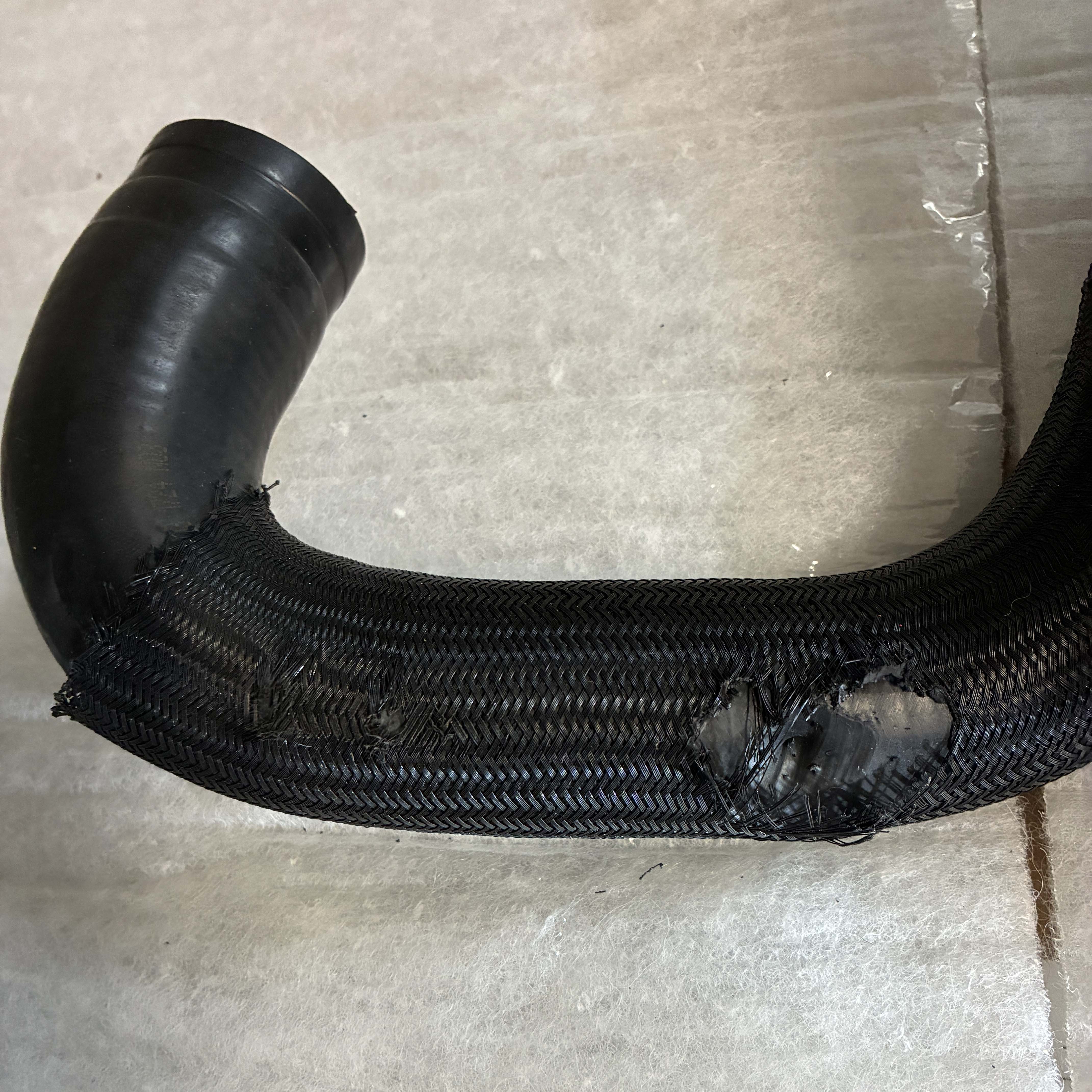
- Cut Coolant Hose: The engine movement can also cause the upper radiator hose to contact the pulley for the power steering pump which will quickly cut a hole in the hose, despite its protective sleeve. You might see steam, or you might get a coolant level low warning. With good motor mounts and a properly installed hose, there is about ¾ inch of clearance to this pulley – this is a good thing to periodically check.
- Engine fan blades hit the transmission cooler lines. These lines run under the fan and there is plenty of clearance when the motor mounts are good. When they have failed, the engine sits lower and this clearance goes away – I saw this on my first CLK55, but I didn’t understand what was happening until later.
- Clunking Noises: The most obvious sign of a bad motor mount is hearing clunking or thumping noises from the engine bay, especially when lifting the foot from the throttle.
- Dented Hood: In severe cases, the left side of the engine can hit the underside of the hood, denting it upwards. If you see a dent on the left side of the hood that looks like you left a tool in the engine compartment and closed the hood on it, you probably have a very bad left side motor mount.
Testing the Motor Mounts:
Testing motor mounts on the CLK55 always makes me nervous. The test is done in Drive, with heavy pressure on the brake pedal. You will be tapping the throttle, and if you don’t have the brakes heavily applied, the car can move forward. Choose the location for this test very carefully!
To perform the test:
- Start the car and let it warm up. Open the hood so that you can see the engine from the driver’s seat.
- Put the car in “Drive” with your foot heavily on the brake pedal.
- Quickly blip the throttle with your other foot, while watching the engine. A good motor mount will not allow much engine motion. A failed motor mount can look like the engine is trying to jump out of the car; the left side of the engine will jump up and in extreme cases you can hear the engine clunk as it slams back down on the failed motor mount.
Replacing the Motor Mounts:
Replacing the motor mounts on a CLK55 isn’t difficult. However, it does take a special tool. You’ll need:
- Engine hoist or lift: You’ll need to be able to support the engine while you are working under the car. You could do this with an engine lift/hoist, but I find it easier to put the car on a four post lift and jack the engine up from below.
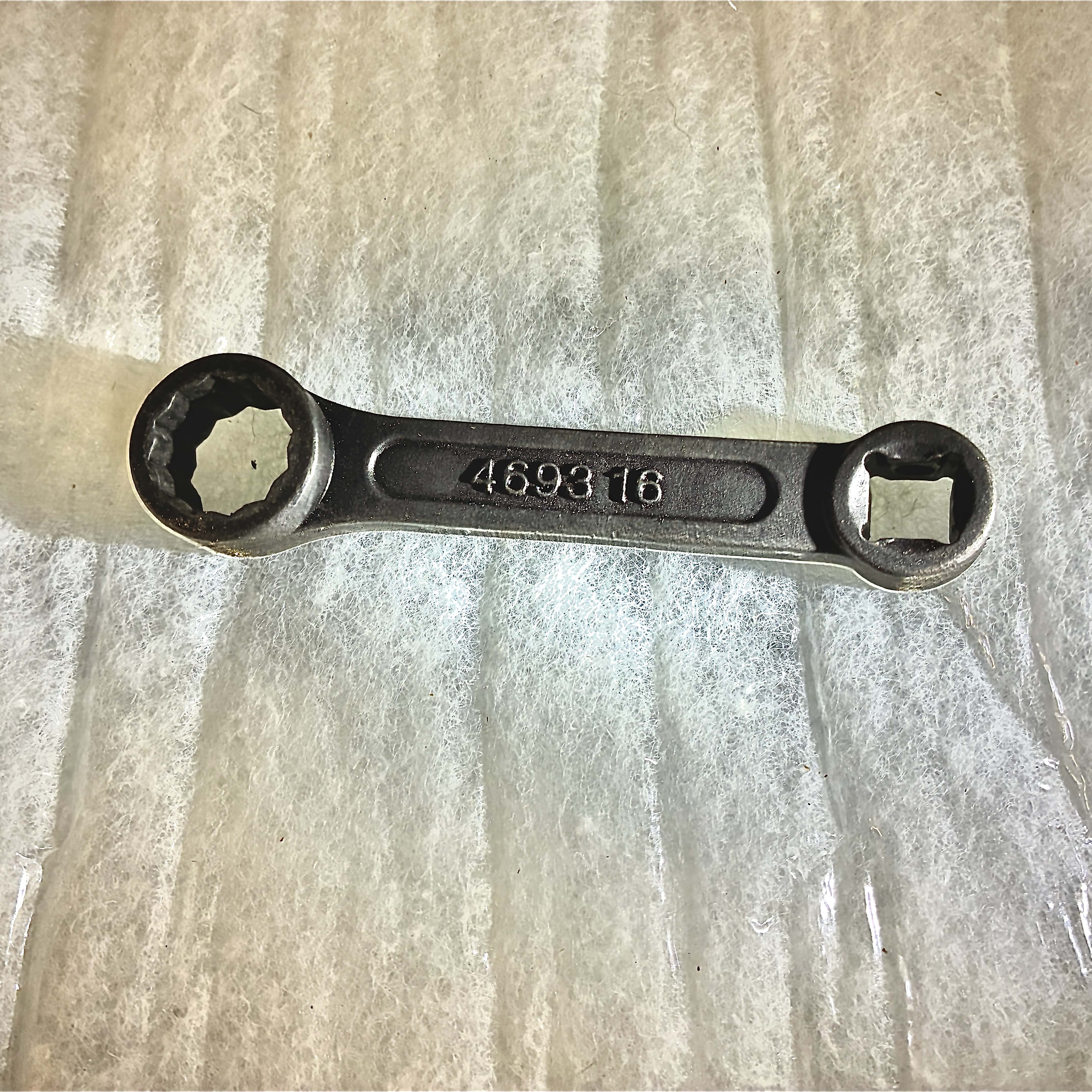
- Special wrench: For the upper mounting bolt. This acts like a long crow’s foot, allowing you to have good access and room to swing the ratchet. I don’t think you can do this job without this special tool. See the picture.
- New motor mounts.
Steps to Replace Motor Mounts:
- Jack up or lift the car. Support it on jackstands if you aren’t using a lift.
- Loosen the upper and lower mounting bolts for the motor mount. Remove the bolts and the heat shield. Pay special attention to the orientation of the heat shield.
- Lift the Engine high enough to remove the old mount: Use an engine hoist or jack to lift the engine. Only lift high enough to get the mount out, don’t overdo it, and it’s best to have the hood open or at least unlatched when you do this. You can do this from below by using a piece of plywood cut to fit the bottom of the oil pan and placing the jack under this. The oil pan is strong enough to allow this, just be sure to spread the load using a fitted piece of wood.
- Remove the Old Mount and install the new one. Note how the tabs on the motor mount fit into slots to ensure correct alignment. Position the new motor mounts, fit the heat shield and start the bolts. You will probably need to lower the engine some to get the lower bolt to line up.
- Lower the Engine: Once the new mounts are correctly in place, slowly lower the engine and tighten the mounting bolts.
- Put the car back on the ground and test drive.
Though it appears that this motor mount is only used on the C208 chassis CLK55, I believe all cars with the M113 engine have this issue, especially the higher powered variants. Since these cars tend to go through motor mounts, I keep a couple of new ones on hand. I have learned that you should be suspicious of the motor mounts if any of the above symptoms show up. A visual inspection might tip you off; since they are fluid filled, if you see stains from leaking fluid, it’s probably bad. The last one I did looked perfectly fine; it was just slightly shorter than the new one, however I also had a cut coolant hose that I think was caused by its failure.
It’s a relatively straightforward job, but a lift will make the process much easier. If you have CLK55s, you’ll get pretty familiar with motor mount replacement.
SOME MORE OBSERVATIONS
After I wrote this article, I noticed that something I said here may not be fully correct. I was at the track this weekend and I noted the clearance had gone away and the upper radiator hose was again touching the power steering pump pulley. This was after I had replaced the left side motor mount as discussed in the above article. I noticed that the hose had pushed off its mounting fitting by about a quarter of an inch which allowed it to barely touch the pulley. These radiators have a raised ridge on this fitting that indicates how far the hose is to be pushed onto the fitting, so it was easy to see that it had moved, and I know this wasn’t how I installed it. I depressurized the cooling system, loosened the hose clamp (which didn’t feel very tight), reseated the hose back fully onto its fitting and then tightened the hose clamp. This restored the about three-quarters of an inch gap between the hose and the pulley.
When I came in later and checked the tightness of the hose clamp, it was again somewhat loose. I think what really happened here was a failing hose clamp that wasn’t maintaining tension allowed the pressure in the cooling system to start pushing the hose off its fitting. It does seem a little unreasonable that a single motor mount could allow the motor to move forward far enough to close that gap up and cause the damage. I think it would take both motor mounts to be sheared as well as a transmission mount failure plus some heavy braking to allow the motor to come forward that far. It could happen, but I don’t think it’s what happened in this case. However, all my comments about changing the motor mounts do still apply and these cars really do eat motor mounts.
Sponsors